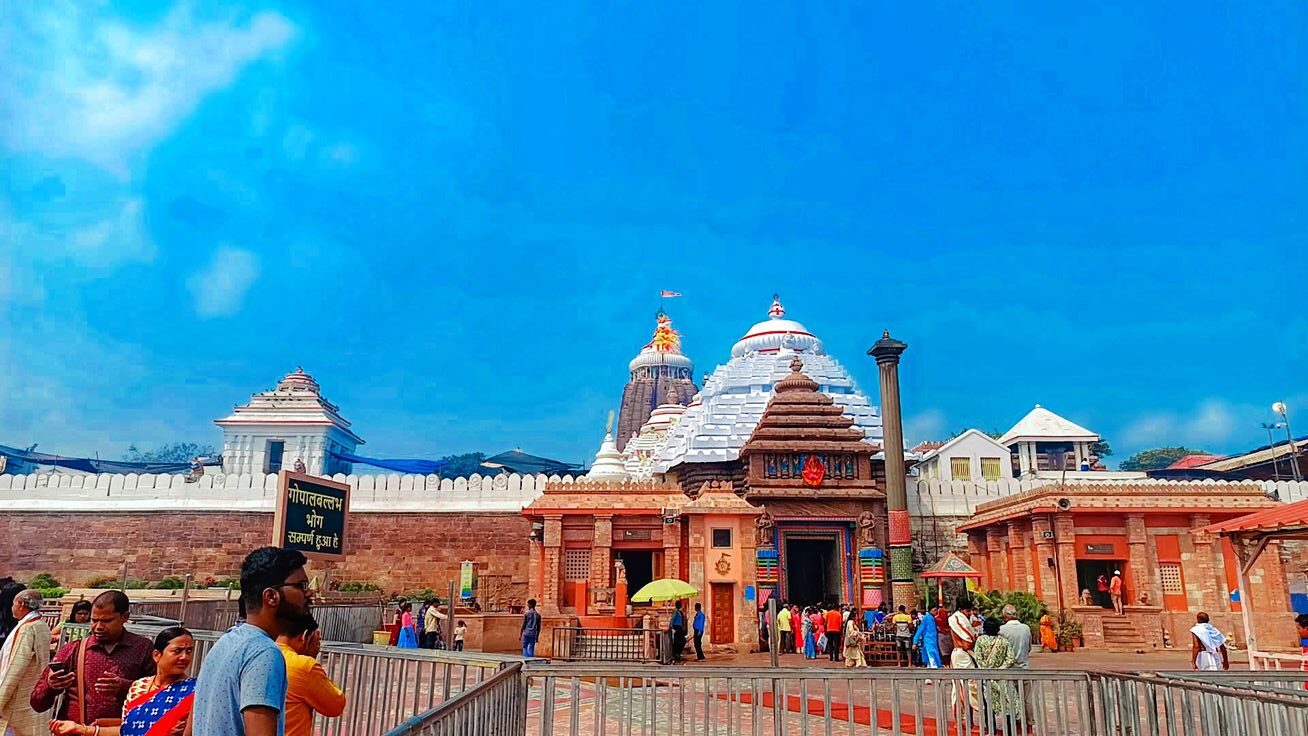
Jagannath Temple: Where Faith Becomes a Living Experience
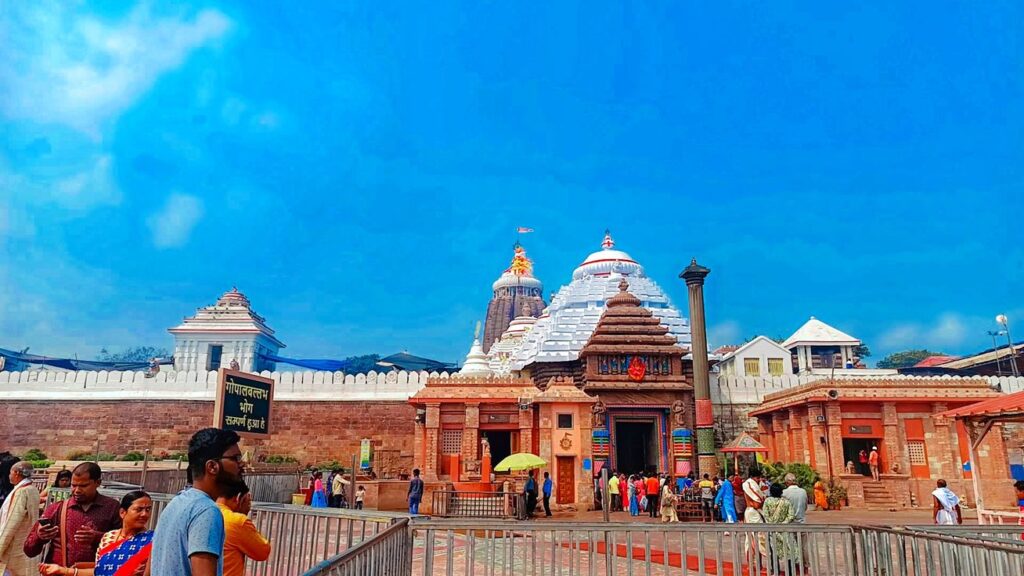
There are temples you visit, and then there are temples that visit you back — in your thoughts, in your silence, in your questions about life. The Jagannath Temple in Puri belongs to the second category. It is not just a structure of stone and rituals. It is movement, mystery, power, and devotion woven together for centuries.
Located in the sacred coastal town of Puri, this temple is one of the most significant pilgrimage sites in India and forms a crucial part of the Char Dham circuit. But reducing it to a “tourist spot” or even just a “pilgrimage destination” would be an injustice. This is a place where history breathes, where rituals challenge logic, and where devotion dissolves ego.
Let’s go deeper.
The Origin: A Story Wrapped in Mystery
The temple is dedicated to Lord Jagannath — a form of Lord Vishnu — along with his siblings Balabhadra and Subhadra. The word “Jagannath” literally means “Lord of the Universe.” But what makes this deity different from others in Hindu temples is the form.
Unlike conventional idols carved in perfect human proportions, the deities here are made of wood, with large circular eyes and unfinished limbs. At first glance, they appear simple. Almost childlike. But that simplicity carries layers of symbolism.
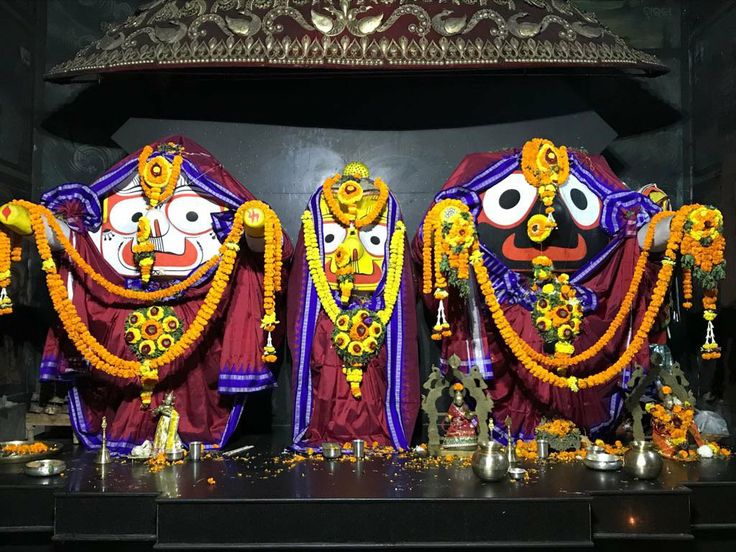
According to legend, King Indradyumna of ancient Odisha had a divine vision to build a temple for Lord Vishnu. The idols were said to be carved by Vishwakarma himself under strict conditions — no one was allowed to disturb the work. Impatient, the king broke the rule before the work was completed, which is why the deities remain in their unfinished form.
Myth or metaphor? That depends on what you choose to believe. But the message is powerful: divinity doesn’t need perfection to be complete.
History and Architecture of Jagannath Temple Puri
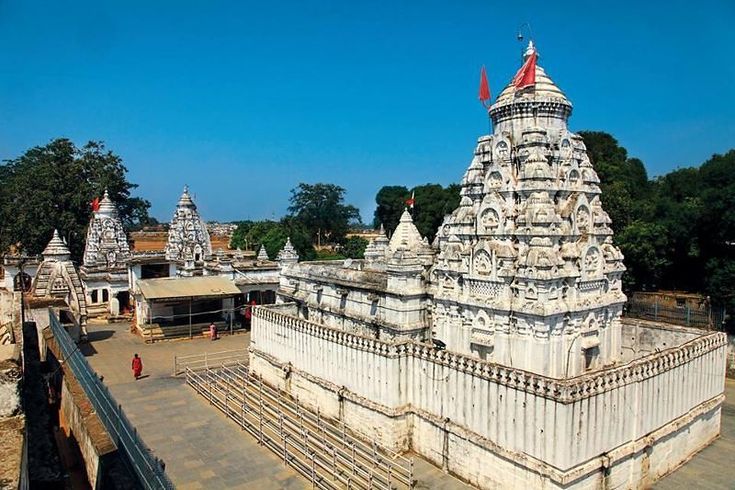
The current temple structure was built in the 12th century by King Anantavarman Chodaganga Deva of the Eastern Ganga dynasty. Standing at around 65 meters, the towering shikhara dominates Puri’s skyline.
The architecture follows the traditional Kalinga style, with intricate carvings and massive stone walls. The temple complex spreads across 400,000 square feet and is enclosed by two massive walls known as Meghanada Pacheri and Kurma Bedha.
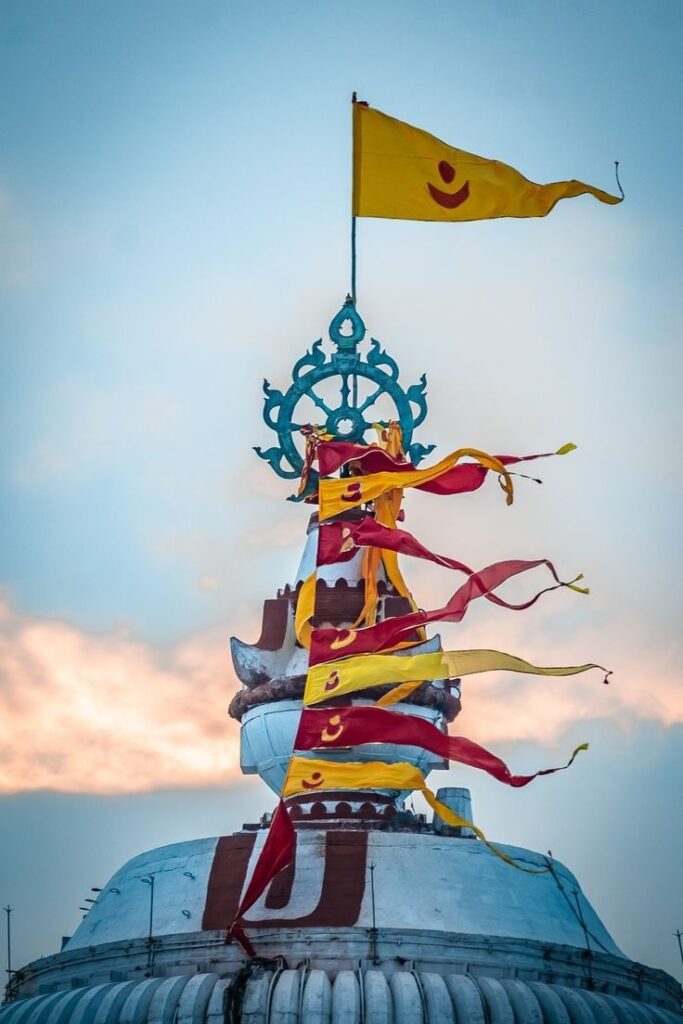
One striking feature is the Sudarshan Chakra mounted on top of the temple. It is said that from any direction you stand in Puri, the chakra appears to face you. Coincidence or design mastery? Either way, it leaves visitors stunned.
Another widely discussed phenomenon is the temple flag. The flag atop the temple always flows in the opposite direction of the wind. Science tries to explain it; devotees call it divine will.
You can choose your side — logic or faith. But once you stand there, both feel small.
The Sacred Rituals: Tradition Without Compromise
This temple doesn’t run like a museum. It runs like a living kingdom.
Daily rituals begin early morning and continue late into the night. Each ritual has been followed for centuries without deviation. Over 600 priests and servitors perform duties that are hereditary in nature.
One of the most unique practices is the Nabakalebara ceremony — the periodic replacement of the wooden idols. The old idols are buried within the temple premises, and new ones are carved from sacred neem trees. This ritual takes place every 12 to 19 years, depending on the lunar calendar. The secrecy surrounding this process is intense. Even today, no one claims to have fully seen the transformation ritual.
Think about it: in an age of surveillance, cameras, and leaks — this tradition remains intact. That’s cultural discipline.
The Kitchen of the Gods: Mahaprasad
The Jagannath Temple kitchen is often described as the largest temple kitchen in the world. Hundreds of cooks prepare food daily in earthen pots stacked one above the other on wood-fired stoves.
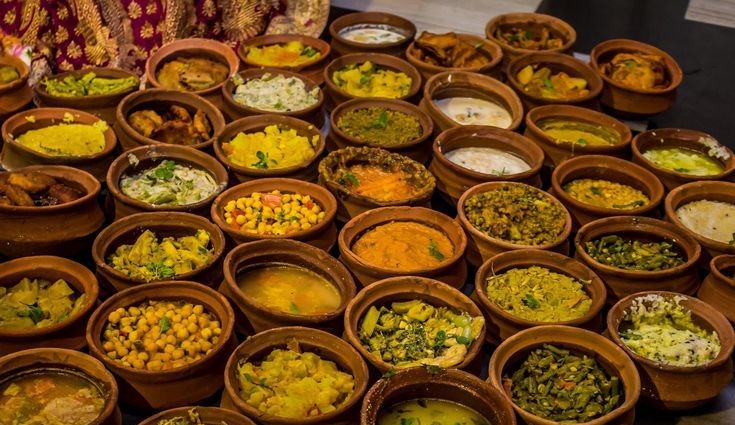
Here’s the fascinating part: the pot placed at the top gets cooked first. Not the one directly on fire. Devotees consider this a miracle.
The food, known as Mahaprasad, is offered to the deities and then distributed among thousands of devotees every day. There is no discrimination. Everyone sits together. Everyone eats the same food. Kings and commoners share the same space.
In a society often divided by status and caste, this practice quietly challenges social hierarchies.
Rath Yatra: The Grand Festival of Lord Jagannath
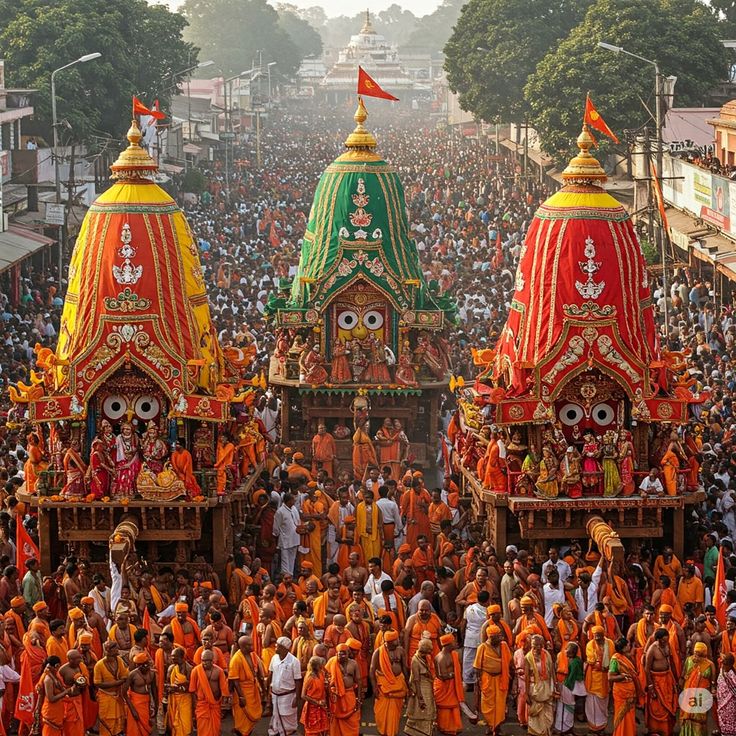
If there is one event that defines Puri globally, it is the Rath Yatra — the grand chariot festival.
Every year, during the month of Ashadha, the three deities are brought out of the temple and placed on massive wooden chariots. These chariots are pulled by thousands of devotees through the streets of Puri to the Gundicha Temple.
The energy is overwhelming. It is chaotic yet deeply spiritual. The idea that God comes out to meet the people — instead of people always going to God — is revolutionary.
Historically, even Mughal emperors and British officials documented the Rath Yatra with awe. The word “Juggernaut” in English is derived from Jagannath, symbolizing an unstoppable force.
That tells you the scale of impact.
Spiritual Democracy: Why Jagannath Is Different
Most temples emphasize order, distance, and hierarchy. Jagannath emphasizes inclusion.
The deity is called “Patita Pavana” — savior of the fallen. Devotees from all backgrounds feel an emotional accessibility here.
Even the form of the idol reflects universality — big eyes watching all, arms that don’t extend fully yet symbolize embrace.
There is something psychologically powerful about this. You don’t feel judged here. You feel seen.
Controversies and Entry Restrictions at Jagannath Temple Puri
The Jagannath Temple Puri has long been a subject of debate, particularly regarding its strict entry policies. One of the most discussed restrictions at Jagannath Temple Puri is that only practicing Hindus are allowed inside the main temple complex. Non-Hindus and foreign nationals are not permitted to enter Jagannath Temple Puri, although they can view the temple from designated nearby points.
Supporters argue that the rule preserves the sanctity and ancient traditions of Jagannath Temple Puri, which has followed hereditary customs for centuries. Critics, however, question whether such restrictions align with modern ideas of inclusivity and global tourism. Despite ongoing discussions, the administration of Jagannath Temple Puri has consistently maintained that the policy is essential to protect ritual purity and preserve the temple’s sacred identity.
Over the years, Jagannath Temple Puri has also faced administrative controversies related to crowd management during Rath Yatra, temple governance, and heritage conservation. Yet, through every debate, Jagannath Temple Puri continues to function according to traditions that are deeply rooted in its spiritual framework.
The Surrounding Ecosystem: Beyond the Temple Walls

Puri is not just about the temple. The nearby Puri Beach offers a contrasting experience — raw sea waves meeting devotional chants in the background.
The town thrives on spiritual tourism. Local artisans sell Pattachitra paintings, seashell crafts, and miniature idols. The economy here is deeply tied to faith.
You will notice something subtle: people here don’t rush spirituality. They live with it.
Why Jagannath Temple Still Matters Today
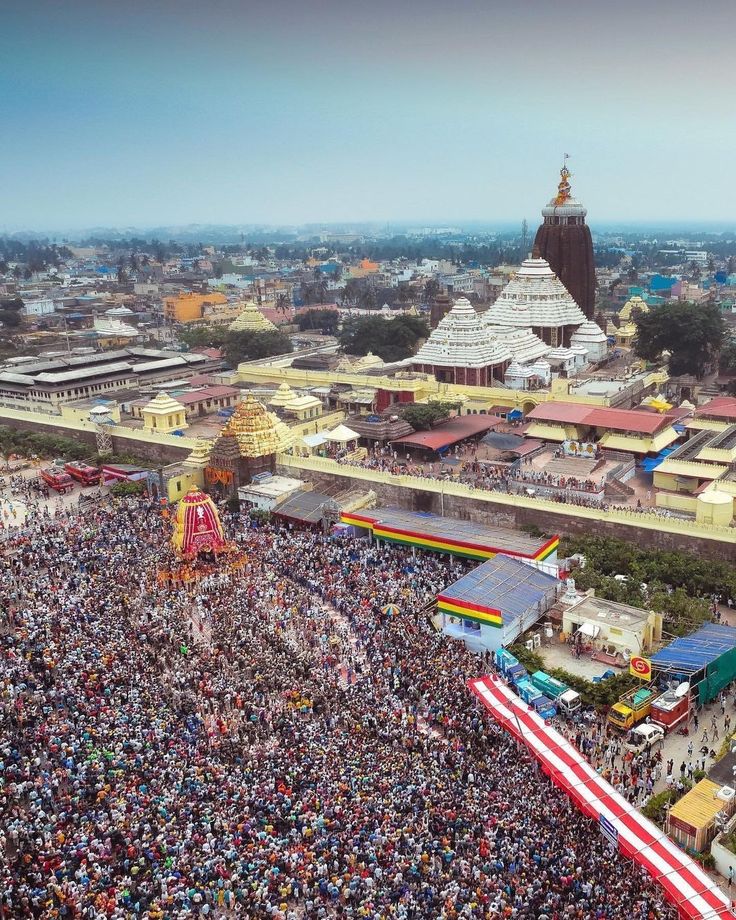
In a world obsessed with speed, visibility, and validation, the Jagannath Temple stands as a reminder of continuity.
It has witnessed invasions, political shifts, colonial rule, and modernization. Yet the rituals remain.
The kitchen still cooks in earthen pots.
The chariots are still made from specific trees each year.
The flag is still changed daily by a priest who climbs without safety equipment — purely as an act of devotion.
This isn’t nostalgia. This is resilience.
Personal Reflection: What You Really Take Back
When you visit Jagannath Temple, you don’t just click photos. You confront scale — of faith, of tradition, of collective belief.
You see thousands bowing with surrender.
You smell incense mixed with ocean air.
You hear conch shells blending with crowd chants.
And somewhere in that chaos, something inside you slows down.
You realize that devotion is less about ritual accuracy and more about surrendering control.
Jagannath — the Lord of the Universe — doesn’t sit in polished marble perfection. He sits in unfinished wood. Watching. Waiting. Accepting.
That is powerful.
Final Thoughts
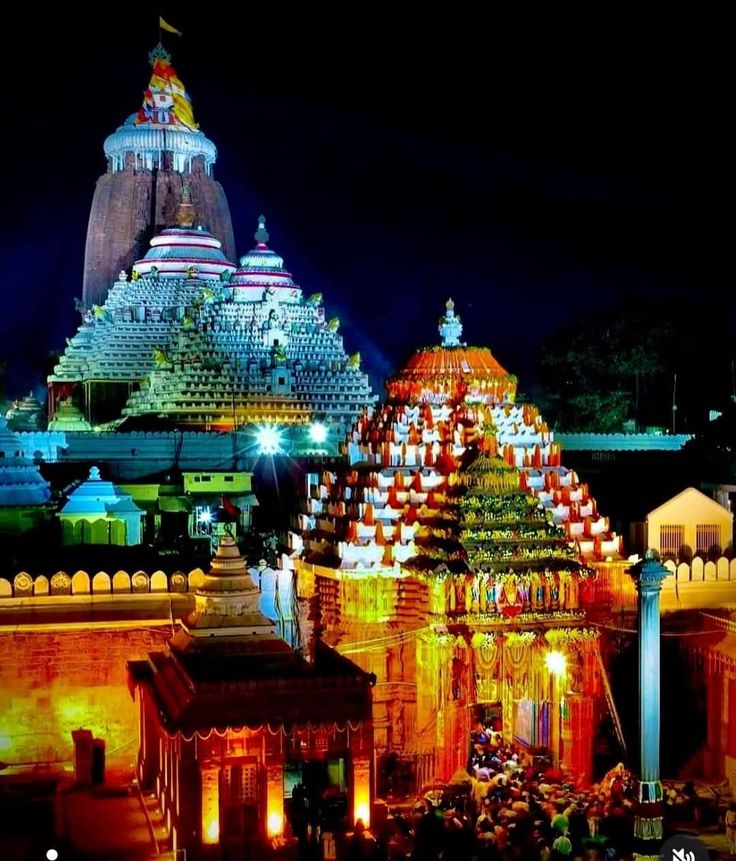
The Jagannath Temple is not just a temple in Odisha. It is a cultural engine, a spiritual magnet, and a historical monument rolled into one.
You can approach it as a devotee, a traveler, a historian, or even a skeptic. It doesn’t matter.
What matters is this: when you stand before those wide circular eyes, you will feel observed — not judged, not measured — just observed.
And sometimes, that is enough to transform you.
If you plan to visit Puri, don’t go casually. Go consciously. Because Jagannath doesn’t just show you tradition.
He shows you perspective.