Himachal Pradesh Spiti Valley: The Complete Travel Guide (2026)
Himachal Pradesh Spiti Valley is one of the last true high-altitude deserts of India — a cold, wind-carved land of monasteries, turquoise lakes, and villages that sit closer to the sky than to civilization. Tucked between the Great Himalayan and Zanskar ranges in the northeastern corner of Himachal Pradesh, Spiti has quietly become one of the most searched-for destinations for travelers who want mountains without the crowds of Manali or Shimla.
If you’re planning your first trip, this guide covers everything: the best time to visit, how to reach Spiti Valley, the top places to explore, permits, budget, and a ready-to-use 7-day itinerary.
Table of Contents
- What Makes Spiti Valley So Special?
- Best Time to Visit Spiti Valley
- How to Reach Spiti Valley
- Top Places to Visit in Spiti Valley
- Things to Do in Spiti Valley
- Where to Stay in Spiti Valley
- Permits Required for Spiti Valley
- Budget for a Spiti Valley Trip
- 7-Day Spiti Valley Itinerary
- Travel Tips for Spiti Valley
- FAQs About Spiti Valley
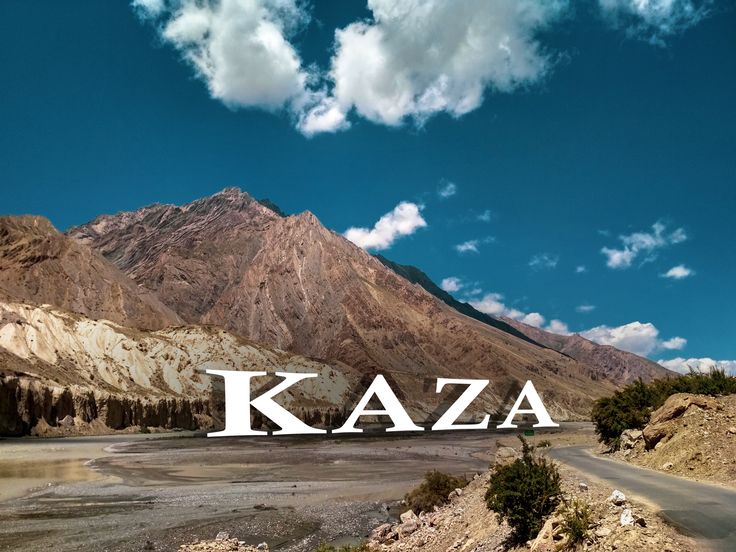
Kaza, the sub-divisional headquarters and unofficial capital of Spiti Valley.
What Makes Spiti Valley So Special?
Spiti means “The Middle Land” — the land between Tibet and India, and that description fits perfectly. Culturally, the region feels far closer to Tibet than to the rest of Himachal Pradesh. You’ll find centuries-old Buddhist monasteries clinging to cliffs, fluttering prayer flags, and villages where life still moves at the pace of the seasons.
Unlike the green, forested valleys of Kullu or Manali, Spiti Valley is a cold desert. The landscape here is raw and lunar — brown mountains, deep gorges, and rivers that turn glacial blue in summer. This contrast is exactly why Himachal Pradesh Spiti Valley has become a bucket-list destination for photographers, bikers, and anyone chasing offbeat Himalayan travel.
Best Time to Visit Spiti Valley
Choosing the right season can make or break your Spiti Valley trip.
- May to June: Roads open up after winter, apricot orchards bloom in lower villages, and the weather is pleasant during the day. Ideal for first-time visitors.
- July to September: The most popular window. Chandratal Lake and high mountain passes are fully accessible, and this is peak season for road trips from Manali.
- October: A quieter, golden-hued time to visit — fewer tourists, clear skies, but colder nights.
- November to April: Spiti turns into “Winter Wonderland” territory, with temperatures dropping well below freezing. Only the Shimla-Kinnaur route stays open, and this season is best suited to experienced winter travelers chasing snow leopard sightings around Kibber.
For most travelers, June to September remains the best time to visit Spiti Valley, balancing accessible roads with comfortable weather.
“Spiti’s nights can drop below freezing even in June — a good [down jacket] made a real difference on our trip.”

How to Reach Spiti Valley
There are two classic routes into Spiti Valley, and combining both makes for the ultimate Himachal Pradesh road trip.
Route 1: Shimla – Kinnaur – Spiti
This is the longer but safer and more scenic route, passing through Narkanda, Sarahan, Sangla, and Kalpa before entering Spiti near Nako. It stays open longer through the year, making it the preferred route in early summer or late autumn.
Route 2: Manali – Kunzum Pass – Spiti
This shorter but more adventurous route crosses the dramatic Kunzum Pass (about 4,551 metres) and is only open from around June to October. It’s the classic route bikers and road-trippers choose for the adrenaline factor.
Nearest airport: Bhuntar Airport (Kullu-Manali), about 245 km from Kaza. Nearest railway station: Shimla or Joginder Nagar, though both require a long onward road journey.
Most travelers combine both routes — entering via Shimla-Kinnaur and exiting via Manali (or vice versa) — to avoid retracing the same road.
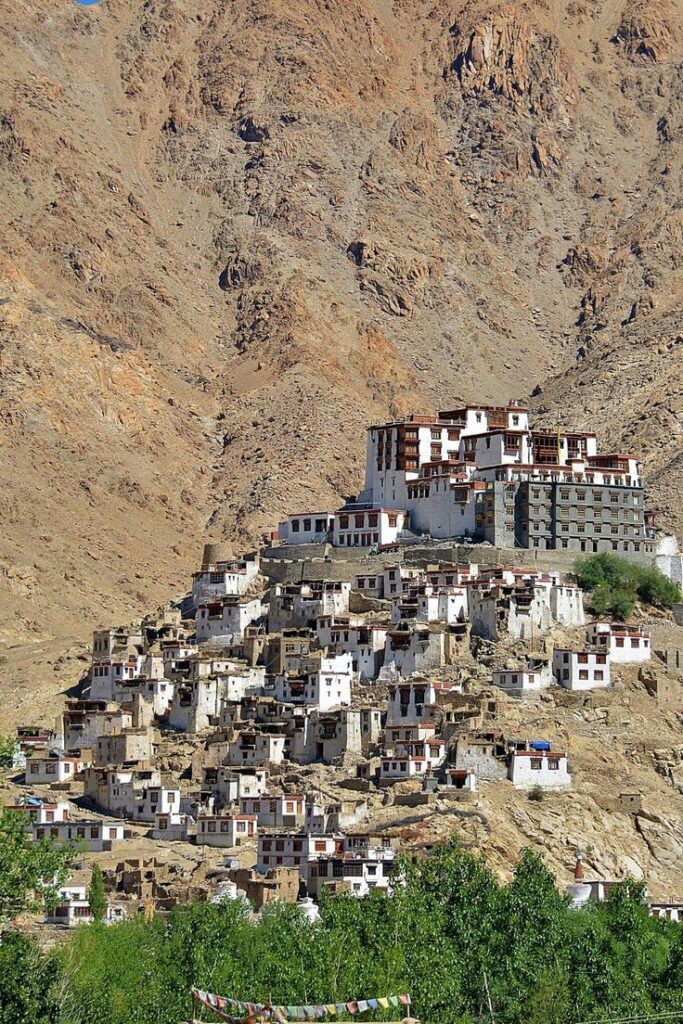
 Key Monastery, the largest and oldest monastery in the Spiti Valley region.
Top Places to Visit in Spiti Valley
1. Kaza – The Heart of Spiti Valley
Kaza is the largest town in the valley and the natural base for exploring the region. It has guesthouses, cafes, ATMs, and fuel stations — the last reliable stop before heading into more remote villages.
2. Key Monastery
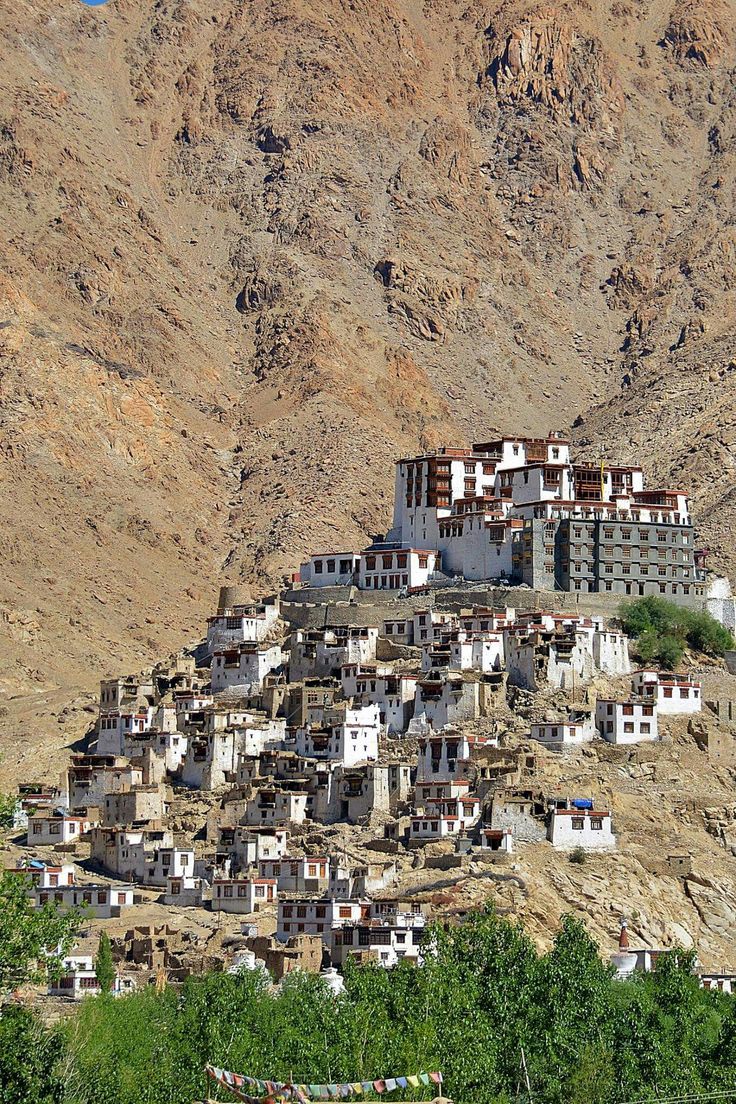
Perched dramatically on a hilltop above the Spiti River, Key Monastery is over 1,000 years old and houses ancient murals, thangkas, and manuscripts. It’s one of the most photographed structures in all of Himachal Pradesh.
3. Chandratal Lake
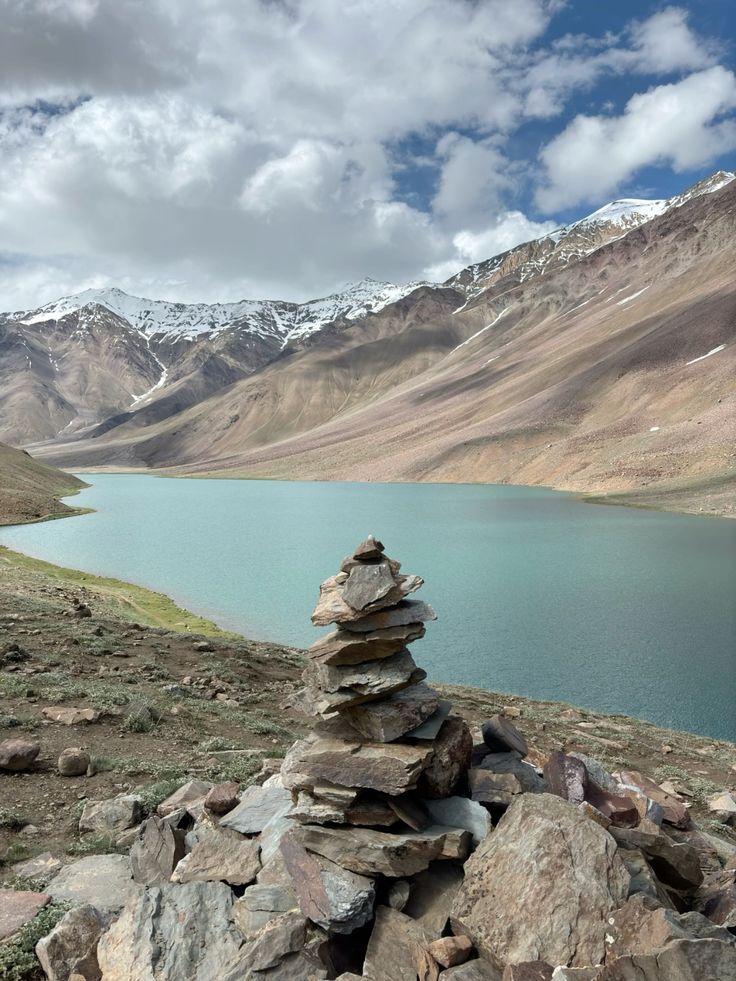
Meaning “Moon Lake” for its crescent shape, Chandratal is a high-altitude lake near Kunzum Pass. Camping beside it under a sky full of stars is, for many travelers, the highlight of the entire Spiti Valley trip.
4. Dhankar Monastery and Lake
Once the ancient capital of Spiti, Dhankar Monastery sits on a cliff edge overlooking the confluence of the Spiti and Pin rivers. A short trek beyond the village leads to the serene Dhankar Lake.
5. Pin Valley National Park
Home to the elusive snow leopard and the endangered Siberian ibex, Pin Valley is a protected cold-desert ecosystem and a must for wildlife and trekking enthusiasts.
6. Kibber Village
One of the highest motorable villages in the world, Kibber is a gateway to snow leopard spotting expeditions, especially in winter.
7. Langza, Hikkim & Komic
This trio of villages is famous for very different reasons: Langza for its giant Buddha statue and marine fossils, Hikkim for the world’s highest post office, and Komic for being one of the highest inhabited villages on Earth.
 Chandratal Lake, often called the crown jewel of a Spiti Valley itinerary.
Things to Do in Spiti Valley
- Send a postcard from Hikkim, the world’s highest post office
- Camp overnight beside Chandratal Lake
- Trek to Dhankar Lake or the Pin-Parvati route
- Spot snow leopards around Kibber in winter (Nov–Feb)
- Try local Spitian food like thukpa, momos, and butter tea
- Attend a prayer session at Key or Tabo Monastery
- Drive over Kunzum Pass and stop at the Kunzum Mata temple
Where to Stay in Spiti Valley
Accommodation in Spiti ranges from basic homestays to comfortable guesthouses:
- Kaza: Widest range of hotels, guesthouses, and cafes — the best base for most of your trip.
- Homestays in Langza, Komic, Demul, and Kibber: Ideal for experiencing authentic Spitian village life and food.
- Camps near Chandratal Lake: Seasonal tented camps operate from June to September; book in advance during peak months.
Given limited electricity and network connectivity in remote villages, it’s wise to keep expectations basic and enjoy the simplicity.
Permits Required for Spiti Valley
As of recent years, an Inner Line Permit (ILP) is required for certain restricted zones near the Indo-Tibetan border, such as areas beyond Sumdo toward Nako on the Kinnaur side. Indian nationals can usually get this permit on the spot at checkpoints, while foreign nationals may need prior approval and often travel in groups. Regulations change periodically, so it’s best to confirm current permit requirements with the local SDM office in Kaza or Reckong Peo before you travel.
Budget for a Spiti Valley Trip
A rough daily budget for Himachal Pradesh Spiti Valley travel:
- Backpacker/Homestay: ₹1,500–2,500 per day (stay + food)
- Mid-range: ₹3,000–5,000 per day (guesthouse/hotel + meals)
- Self-drive/rental vehicle: ₹3,000–6,000 per day depending on vehicle type
- Fuel: Fill up fully in Kaza, Reckong Peo, or Manali — fuel stations are scarce in between
A well-planned 7-day trip typically costs between ₹15,000 and ₹35,000 per person, depending on travel style.
7-Day Spiti Valley Itinerary
Day 1: Shimla to Kalpa via Narkanda and Sarahan Day 2: Kalpa to Nako, crossing into Spiti near Sumdo Day 3: Nako to Kaza via Tabo Monastery and Dhankar Day 4: Kaza local sightseeing — Key Monastery, Kibber, Chicham Bridge Day 5: Kaza to Langza, Hikkim, Komic and back Day 6: Kaza to Chandratal Lake via Kunzum Pass (overnight camping) Day 7: Chandratal to Manali via Rohtang/Atal Tunnel
This route lets you experience both entry roads without backtracking and covers nearly every highlight of Spiti Valley.
Travel Tips for Spiti Valley
- Acclimatize for at least a day before heading to high-altitude points like Kunzum Pass or Chandratal
- Carry cash — ATMs are limited to Kaza and Reckong Peo
- Network connectivity (BSNL/Jio in patches) is unreliable throughout the valley
- Pack layered clothing; temperatures swing sharply between day and night, even in summer
- Fill fuel tanks whenever possible; petrol pumps are few and far between
- Respect monastery photography rules and local customs
- Carry basic medication for altitude sickness (AMS) and stay hydrated
FAQs About Spiti Valley
Q1. What is the best time to visit Spiti Valley? June to September is the best time to visit Spiti Valley, when both the Manali and Shimla-Kinnaur routes are open and the weather is most favorable.
Q2. How many days are needed for a Spiti Valley trip? A minimum of 6–7 days is recommended to properly cover Kaza, Key Monastery, Chandratal Lake, and the surrounding villages without rushing.
Q3. Is a permit required to visit Spiti Valley? Indian travelers generally need an Inner Line Permit only for specific restricted stretches near the border, obtainable at local checkpoints. Foreign nationals should check current requirements in advance.
Q4. Can Spiti Valley be visited in winter? Yes, though only via the Shimla-Kinnaur route, as the Manali route closes due to snow. Winter is also the best season for snow leopard sightings near Kibber.
Q5. Is Spiti Valley safe for solo travelers? Yes, Spiti is considered safe and welcoming for solo travelers, including women, though it’s wise to travel with proper permits, cash reserves, and a charged phone with offline maps.
Conclusion
Few places in India offer the raw, high-altitude beauty of Himachal Pradesh Spiti Valley — ancient monasteries, star-filled skies, and villages that feel untouched by time. Whether you’re road-tripping from Manali, driving in via Shimla-Kinnaur, or planning a longer offbeat Himalayan journey, Spiti rewards those willing to travel a little slower and a little higher. Plan around the right season, sort your permits in advance, and this cold desert valley will easily become one of the most memorable trips of your life.